
Cloud Security
-
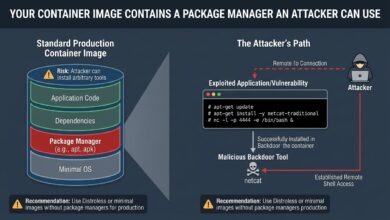
Your Container Image Contains a Package Manager an Attacker Can Use
A full base image ships a shell, a package manager and hundreds of libraries your application never calls, and all…
Read More » -

The Log You Need During an Incident Is the One Nobody Enabled
Control-plane logging is usually on by default. Data-plane access — who actually read which object — usually is not.
Read More » -

A Flat Cloud Network Turns One Compromise Into All of Them
Default cloud networking permits every workload to reach every other. That convenience is precisely what makes lateral movement effortless.
Read More » -

Encryption at Rest Protects Against One Threat You Do Not Face
Default cloud encryption defeats physical disk theft. It provides no protection at all against the compromised application credential that actually…
Read More » -

Kubernetes RBAC Grants More Than Its Verbs Suggest
Permission to read secrets in a namespace is obvious. Permission to create pods in that namespace grants the same access…
Read More » -
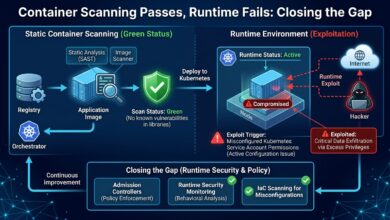
Container Scanning Passes, Runtime Fails: Closing the Gap
A clean image scan says nothing about what a container does once running. Most container compromises exploit runtime configuration rather…
Read More » -
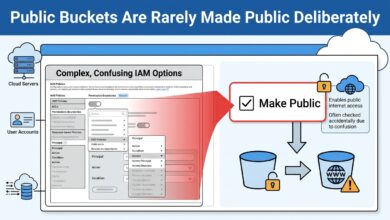
Public Buckets Are Rarely Made Public Deliberately
Almost no one sets a bucket to public on purpose. Exposure comes from inherited policies, broad ACLs and a permission…
Read More » -

Cloud Breaches Are Configuration Failures, Not Hacking
Almost no cloud breach involves defeating the provider's security. It involves a permission granted too broadly, a bucket left open,…
Read More »